
TCLP Testing and Waste Characterization
Pace® provides Toxicity Characteristic Leaching Procedure (TCLP) testing for hazardous waste characterization, using EPA SW-846 Method 1311. TCLP simulates acidic leaching in a municipal landfill and quantifies the mobility of the 40 EPA-listed toxic constituents in a waste sample, which determines whether that waste can be accepted at a given disposal site. The Pace® TCLP Center of Excellence handles liquid, solid and multi-phasic samples, including stratified wastes requiring difficult sub-sampling and complex non-aqueous materials.
The TCLP Center of Excellence can manage even the most challenging characterization projects with efficiency and accuracy. For our customers, this translates to:
- Unmatched capacity
- Operational excellence
- Support for difficult sub-sampling of stratified waste
- Ability to assess challenging multi-phasic material
- Specialized knowledge to manage complex non-aqueous waste samples
- Solidification expertise
- Customer time and cost savings
- Consistent, high-quality data and an end-to-end customer experience

What Is TCLP?
Toxicity Characteristic Leaching Procedure, also known as TCLP testing, helps ensure environmental safety when handling, transporting, or disposing of potentially hazardous materials. Toxicity Characteristic Leaching Procedure is a chemical analysis process used to analyze the presence of hazardous compounds in waste. The U.S. Environmental Protection Agency (EPA) has identified 40 toxic chemicals that may harm the environment when products containing them are disposed of in landfills.
Toxicity Characteristic Leaching Procedure testing simulates acidic leaching through a landfill. The resultant leachate is then characterized to quantify the extent of the danger. This information is often used to determine the appropriate method for waste disposal. Specifically, Toxicity Characteristic Leaching Procedure testing identifies:
- The mobility of specific organic and inorganic contaminants in waste materials
- Hazardous and nonhazardous wastes for disposal in appropriate landfills
- The amount of EPA-listed contaminants present
- The likelihood these contaminants may be absorbed into soil and groundwater
How Does Leaching Occur?
Leaching occurs when liquids are filtered through waste deposits in a landfill. When the liquid meets the buried wastes, it can draw out chemicals of concern. The contaminated liquid is referred to as leachate.

How Are Samples Prepared For TCLP Testing?
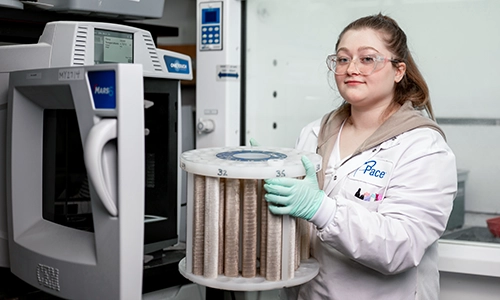
Prior to starting the Toxicity Characteristic Leaching Procedure method, the laboratory must classify the waste sample received as liquid or solid by determining the percent of solids. If the sample is greater than 0.5% solids, the sample is characterized as solid waste. A sample with less than 0.5% solids is characterized as liquid waste. Samples characterized as liquid waste become the sample extract and are prepped for analytical testing as required by RCRA (Resource Recovery and Conservation Act.)
What Is The Synthetic Precipitation Leaching Procedure (SPLP) Method?
The Synthetic Precipitation Leaching Procedure (SPLP) extraction process is similar to TCLP, but its project applicability differs. SPLP is generally used for soil samples to determine how easily contaminants present in soil will leach into groundwater. SPLP is often requested for projects where environmental engineers want to evaluate the risk of groundwater contamination from the land application of waste materials. In contrast, TCLP is used for waste characterization prior to disposal at a landfill and can be performed on liquid, solid, or multi-phasic samples.

TCLP Extraction Methods: EPA 1311, EPA 1312 and ASTM D3987
Pace® supports three extraction procedures, each matched to a different project question.
- EPA SW-846 Method 1311 (TCLP) replicates leaching in a municipal landfill and is used for waste characterization prior to disposal. It applies to liquid, solid and multi-phasic samples.
- EPA SW-846 Method 1312 (SPLP) replicates leaching from normal weathering and acid rain, and is generally used on soils to assess the risk of groundwater contamination from land application of waste materials.
- ASTM D3987 leaches solid waste with water by shake extraction to produce an aqueous solution, where a neutral rather than acidic extraction is specified.
Samples are first classified as liquid or solid by percent solids. Above 0.5% solids the sample is characterized as solid waste. At or below 0.5% solids it is characterized as liquid waste and the sample itself becomes the extract.
Who We Serve
TCLP testing is requested wherever a waste stream has to be characterized before it is transported or disposed of, most often by environmental consultants and engineers, landfills and waste handlers, industrial generators operating under RCRA, and municipalities.
Environmental Consultants And Engineers
Consultants often manage the disposal and cleanup of industry-generated waste. They also support landfills and waste handlers.
Landfills/Waste Handlers
Industry
Many industries generate waste that must be characterized before disposal. RCRA requires that industrial waste be characterized following testing protocols published by the EPA.
Municipalities
Many local governments have at least some responsibilities for waste management. Municipalities may own solid waste facilities, such as transfer stations, recycling centers, combustors, and landfills.
TCLP Reports and Turnaround
TCLP reports identify the extraction method, the analytical method for each constituent, the analytical date and the regulatory limit alongside the result, so the pass or fail determination is visible on the report rather than calculated afterward. Chain of custody documentation accompanies every sample. Contact the laboratory to confirm standard and rush turnaround before you sample, since disposal schedules usually drive the timeline.

Pace® TCLP Center Of Excellence
Need waste characterized before disposal?
Additional Resources
Need to find a lab that can handle your unique requirements?
Contact us directly or download our list of environmental certifications across our network.